


Indoor enrichment · 9 min read
A basket overflowing with toys can become part of the furniture. The problem is not necessarily too little choice. It is that every object is always present, favorites lose their clear beginning and ending, and worn attachments can disappear into the pile.
A useful rotation is smaller: keep a few safe independent options available, bring one special activity out for a short supervised session, and store it again after inspection. Ohio State’s Indoor Pet Initiative recommends varied toys that cats can roll, pounce on, capture, carry, chase, and bite, rotated in different sequences to renew interest.
Decision aid
The seven-day behavior rotation
This is a planning example, not a requirement to make a cat play every day. Repeat a preferred pattern, shorten a session, or leave the schedule empty when the cat chooses rest.
| Day | Opportunity | Simple setup |
|---|---|---|
| 1 · Watch | Slow visual movement with pauses and cover. | Move one physical toy briefly, then let it disappear behind a box edge. |
| 2 · Chase | A clear floor route with short bursts. | Roll a ball across one safe surface and stop before interest fades. |
| 3 · Hide | More than one entrance, exit, or peek point. | Open a tunnel or clean box and leave the cat free to investigate. |
| 4 · Kick | A soft object large enough to grab with the front paws and kick with the hind legs. | Offer one intact kicker toy under supervision. |
| 5 · Forage | A small appropriate food search when diet allows. | Use part of the measured daily ration in a suitable puzzle. |
| 6 · Choose | Two different prey patterns presented separately. | Compare low mouse-like movement with short fluttering movement. |
| 7 · Reset | Inspect, clean, charge, and record. | Keep the favorite special; remove damaged or ignored items from the active set. |
Sort the toy box by behavior, not by product name
Lay every toy out without the cat present and group it by the action it makes possible: watch, stalk, chase, capture, carry, kick, hide, scratch, or forage. One object may cover several groups. The goal is not a perfect taxonomy; it is to notice when ten items all create the same fast floor chase.
Keep simple household objects only when they are genuinely safe for the individual cat. Remove loose elastic, exposed wire, small detachable pieces, torn seams, leaking batteries, damaged charging ports, and anything the cat can swallow or become entangled in. A familiar toy does not earn an exemption from inspection.
- Independent options: sturdy items documented for safe solo access.
- Interactive options: wands or moving objects that require a person and full supervision.
- Automatic options: short, supervised movement with clear controls and a safe floor route.
- Food options: puzzles or searches that use the cat’s measured diet when appropriate.
Learn which prey pattern earns the first response
A cat may prefer low, interrupted mouse-like movement, brief airborne fluttering, or tiny bug-like changes in direction. Watching, turning the head, lowering the body, and waiting beside cover can all be part of the sequence. Do not score interest only by running speed.
The Ohio State prey-preference exercise suggests alternating bird-, mouse-, and bug-like patterns to see what the cat follows. Change one feature at a time—height, sound, speed, or cover—so the response remains readable.
Keep the active set deliberately small
Leave two or three suitable independent toys available, then bring out one special interactive option for a defined session. A cat that repeatedly sleeps beside one toy may be making a case for keeping it in the daily set. Rotation should preserve preferences, not override them for the sake of a calendar.
The Cat Friendly Homes play guide recommends routine toy changes and a physical capture at the end of hunt-like play. Use the chase, catch, reset routine when the day’s activity involves guided movement.
Match the room to the day’s movement
A chase day needs traction and a clear route away from stairs, cables, doors, and sharp furniture. A tunnel day needs stable fabric, intact supports, and more than one usable opening. A kicker day needs a clear object without failing seams or exposed filling. Set the room before the cat becomes focused on the toy.
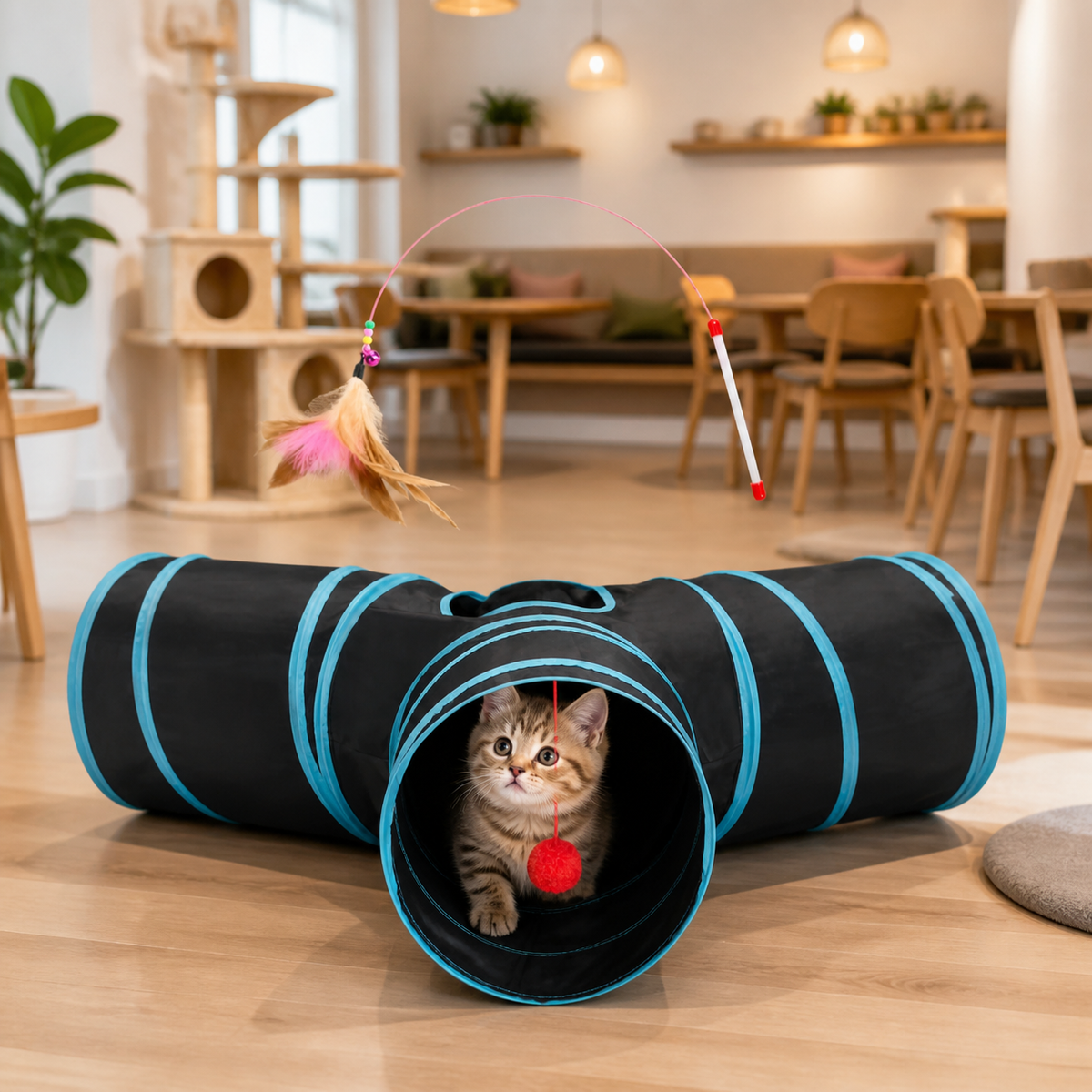
The three-way collapsible tunnel creates several hide-and-exit routes, but the attached teaser and internal supports still require inspection. The rechargeable rolling ball belongs on a clear supervised floor and should be charged and stored exactly as documented.
Important condition
String, wire, feathers, elastic, loose filling, and powered movement can become hazards when damaged or used without supervision. Remove the item at the first change in its documented safe condition.
End with something the cat can resolve
Slow the final movements and make a physical capture possible. That may be pinning the toy, grabbing an intact kicker, or finding a small food reward when the cat’s diet allows it. The point is to give the sequence a tactile or edible end instead of making the target vanish at maximum intensity.
Put the special toy away only after the cat has disengaged. Gather attachments, switch off automatic devices, and return the room to a calm, readable state. Store catnip or silvervine products securely; response varies, and more exposure is not automatically more enriching.
Use day seven to edit the next week
Record the first sign of interest, the movement pattern, whether a capture happened, and how the session ended. Keep notes brief enough to repeat. After one week, retain the patterns the cat chose and replace only one ignored or impractical setup.
Browse the indoor play collection by the missing behavior opportunity, not by novelty alone. Check exact dimensions, materials, power, included parts, cleaning, and supervision requirements before adding anything to the rotation. The best next toy may also be a paper ball, clean box, or the favorite already in storage.
- Which motion earned the first head turn or weight shift?
- Which room surface made movement safe and easy?
- Did the cat capture, carry, kick, forage, or simply observe?
- Which object needs cleaning, repair, retirement, or a longer rest?
Frequently asked questions
How often should I rotate my cat’s toys?
There is no universal interval. A weekly review is easy to remember, while individual toys may rotate every few days or remain available because the cat clearly prefers them. Interest, safe condition, and the cat’s choice matter more than a rigid schedule.
How many toys should I leave out?
Start with a small varied set that is documented as safe for the access you provide, plus supervised interactive sessions. The useful mix offers different actions without turning worn parts into an uninspected pile.
Why does my cat only watch the toy?
Watching can be stalking, the movement may not match the cat’s preferred prey pattern, or the cat may be choosing not to engage. Slow down, add pauses and cover, try one different movement type, and respect a decision to stop.
Make one useful change
Choose seven safe objects from the current toy box and label the behavior each supports. Leave two varied options out, store the rest, and begin with the movement pattern your cat already follows.
This journal provides general educational guidance, not veterinary diagnosis. Contact your veterinarian about health changes, pain, distress, or advice for an individual cat.