

Cat-friendly rooms · 9 min read
Small rooms do not need the tallest cat tree. They need one dependable edge where a cat can watch the room, step down without conflict, scratch after resting, and leave by a clear route.
Feline environmental guidance supports raised safe places, vertical space, separated resources, and opportunities to scratch. The design problem is to combine those needs without turning a window into a risky installation or a narrow route into a dead end.
Decision aid
The six-point fit check
Do not install from the room photograph alone. Pass every check with the current product instructions and the real window before your cat uses the perch.
| Check | Pass when | Stop when |
|---|---|---|
| Product | The exact model’s dimensions, load guidance, assembly, and parts are documented. | The listing is ambiguous or required parts are missing. |
| Glass | The specified clean, smooth, intact surface matches the instructions. | Glass is cracked, textured, loose, filmed, or otherwise excluded. |
| Route | The cat can get on and off without one difficult leap or a blocked landing. | Furniture, doors, another pet, or a hard edge traps the route. |
| Climate | The cat can leave direct sun, heat, and drafts whenever it chooses. | The perch becomes the only rest option in a hot or cold window. |
| Scratch | A stable preferred scratch texture sits near the waking or travel route. | The scratcher tips, slides, or asks for an awkward posture. |
| Inspection | Every mount, seam, support, and surface can be checked before use. | A suction point lifts, hardware loosens, or fabric tears. |
Watch the window before adding the perch
Notice which sill, sofa back, or cabinet edge the cat already uses and at what time. The best view may be morning birds, afternoon warmth, or simply the doorway reflected in the glass. Place the perch where it extends a real route, not where it photographs best.
The Ohio State Indoor Pet Initiative suggests perches near windows as part of an interesting indoor environment. That does not make every window suitable. First check traffic, temperature, glass condition, blind cords, plants, and whether another animal can block the landing.
Treat the installation instructions as the design brief
A suction-mounted perch depends on the complete system: the specified glass, clean mounting points, intact cups, correctly assembled supports, suitable fabric or platform, and the current load guidance for the exact model. Do not infer capacity from a similar-looking product or from catalog photography.
Before mounting, read the full instructions. Clean and prepare the surface exactly as directed, assemble every part, and test the empty perch. If the instructions call for a waiting period, retightening, or a specific orientation, that requirement is part of the installation—not an optional care tip.
Important condition
Meowbles cannot verify a home’s glass, installation, or individual cat from a photograph. If the window or mounting method is uncertain, choose a floor-supported alternative or ask a qualified local professional.
Build an easy route up and down
A perch is only as usable as its approach. A young agile cat may jump from a wide sill; a senior, kitten, larger cat, or cat with mobility limits may need a broad intermediate surface. The landing should be stable, non-slip, and clear of sharp furniture corners.
AAFP/ISFM guidance describes a safe place as somewhere a cat can retreat and notes that raised areas are commonly preferred. It also emphasizes choice. Keep another resting option available, and avoid a route where one cat can guard the only way down.
- Mark the expected takeoff and landing points with tape.
- Open drawers, doors, and curtains to test real conflicts.
- Check the route from cat height, not only while standing.
- Keep blind and curtain cords secured completely out of reach.
Manage sun, heat, drafts, and the outside view
Window conditions change through the day. Recheck the perch when direct sun reaches the glass and when heating or cooling equipment is running. The cat must be able to leave the warm or cold surface easily and reach shade, water, and another rest point.
The outside view can also raise arousal. Birds may be enriching; an unfamiliar outdoor cat may trigger fixed staring, agitation, marking, or conflict with another indoor cat. If the view is repeatedly distressing, move the perch, block part of the sightline, or discuss the pattern with a veterinarian or qualified feline behavior professional.
Put the scratch surface where the stretch happens
Scratching is normal behavior and often follows rest. Ohio State recommends a scratch surface tall enough for a full stretch, sturdy enough not to fall, and made from a material similar to the cat’s existing preference. Location matters: sleeping areas and room entrances are common useful zones.
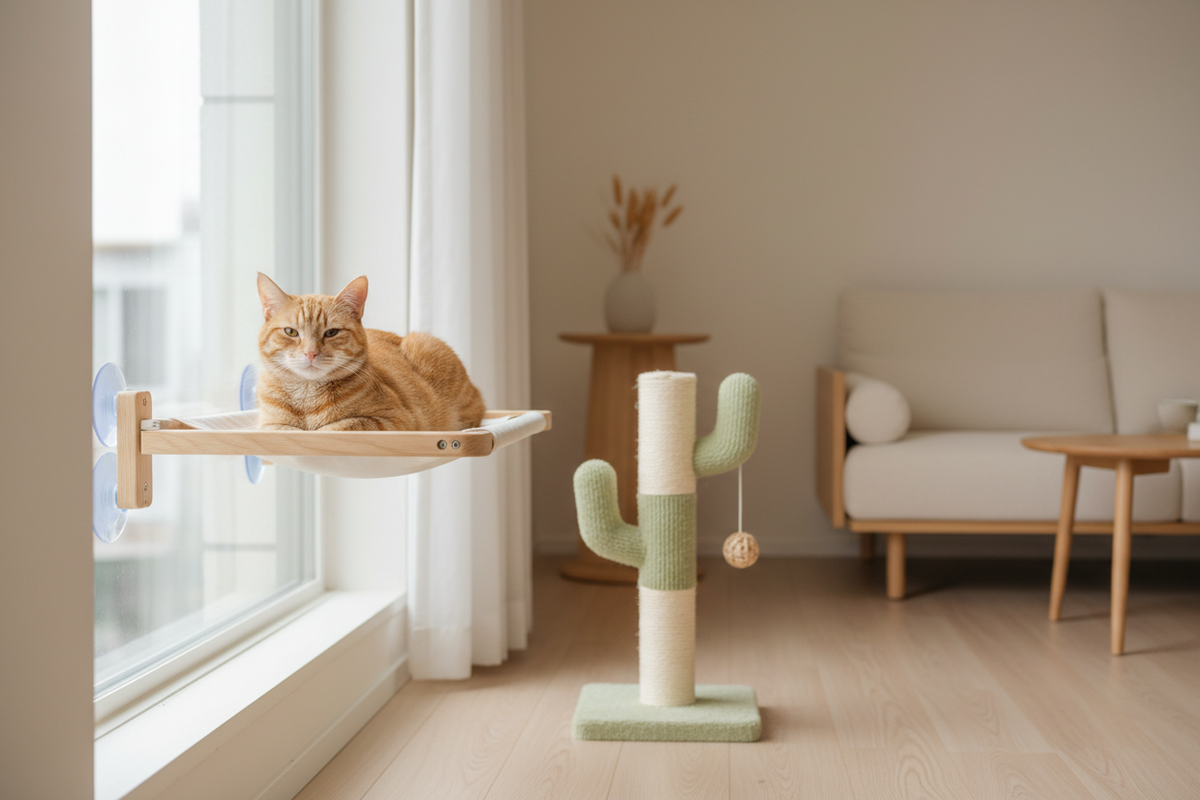
The low round cactus sisal scratching post is one texture and posture option, not a universal replacement for a tall post. If your cat reaches upward on a sofa arm, add a stable vertical surface. If the cat scratches rugs, a horizontal option may be the better companion to the window perch.
Inspect the zone before every use
Suction, fabric, seams, supports, scratch material, and floor grip are wear parts. Press and check every mounting point at the interval required by the manufacturer and before letting the cat return after cleaning, heat changes, or a long period without use.
Remove the perch immediately if a cup lifts, a bracket shifts, fabric tears, glass changes, or any part no longer matches the documented installed condition. Replace a scratcher when material or attachments become loose enough to expose a hazard. Successful use includes wear; safe use includes noticing it.
- Mounts fully engaged and free of cracks or distortion.
- Supports tight and platform level.
- Fabric or cushion dry, intact, and correctly attached.
- Landing clear and scratcher stable on the floor.
Test the layout before buying a second piece
Use painter’s tape to mark the cordless foldable window perch footprint and the scratch zone below. Live with the marked route for a day. If a chair, curtain, or door constantly enters it, the conflict will remain after the product arrives.
Introduce the installed perch without placing the cat on it. Let the cat investigate and choose. Keep the familiar observation and rest points available while the new zone earns trust. A product that supports choice is more useful than one that requires repeated lifting, coaxing, or blocking of the old route.
Frequently asked questions
Are suction-cup window perches safe for cats?
Safety depends on the exact product, compatible intact glass, correct installation, documented load guidance, ongoing inspection, and the individual cat. If any of those cannot be verified, use a floor-supported perch instead.
Where should a scratching post go?
Start near the places your cat already scratches, wakes, enters a shared room, or begins a vertical route. Match the preferred orientation and material, and make sure the surface is stable enough for a full stretch.
Can a window perch replace a cat tree?
It can add useful observation and rest space, but it may not provide hiding, multiple levels, long vertical scratching, or an easy route for every cat. Judge the full set of behaviors and keep more than one safe resting choice.
Make one useful change
Tape the proposed perch, landing, and scratch footprints in the room. Test the door, curtain, sunlight, and traffic through one full day before ordering or installing anything.
This journal provides general educational guidance, not veterinary diagnosis. Contact your veterinarian about health changes, pain, distress, or advice for an individual cat.